Tundra Swan
Cygnus columbianus
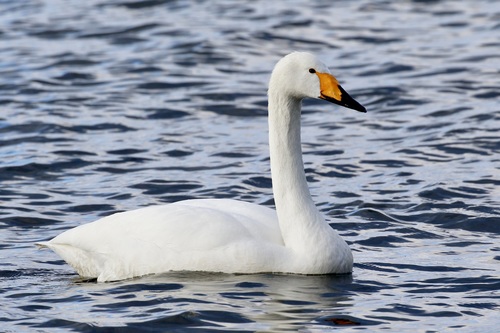
Photo: Maga-chan / CC BY-SA 2.5 / Wikimedia Commons
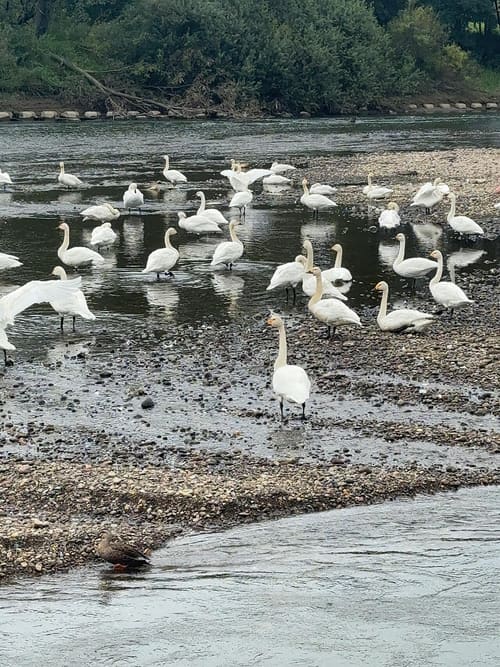
The tundra swan is a white swan with a small yellow patch at the bill base, arriving in Japan in winter from Siberia. It feeds on lakes and in paddies, calling to one another in flocks. Wintering sites such as Izunuma-Uchinuma in Miyagi, Lake Inawashiro in Fukushima and Suibara in Niigata are Natural Monuments.
- Scientific name
- Cygnus columbianus
- Group
- Birds
- Prefectures
- Aomori, Miyagi, Fukushima, Niigata
- When to see
- October to March
- 日本語
- コハクチョウ
- 简体中文
- 小天鹅
Sign in to record the animals you meet in your private journal and to post photos and comments. Browsing needs no account.
Sign inNatural Monuments related to the Tundra Swan
When to see
- 1
- 2
- 3
- 4
- 5
- 6
- 7
- 8
- 9
- 10
- 11
- 12
Arrives at Izunuma-Uchinuma in Miyagi together with Whooper Swans around late October and leaves for the north around late March. Swan numbers peak around January.
Exhibit sourceMap
Markers show designated habitats and breeding sites.
Loading map…
Frequently asked questions
The Tundra Swan is designated as a species without a fixed area and lives in places such as Aomori, Miyagi, Fukushima, Niigata.
The Tundra Swan is mainly seen in October to March. Arrives at Izunuma-Uchinuma in Miyagi together with Whooper Swans around late October and leaves for the north around late March. Swan numbers peak around January.
Animals related to the Tundra Swan
Animals in the same group or designated in the same area.
Community photos
Sign in to post and share photos and comments about the animals you meet.
Comments
No comments yet.