Greater White-fronted Goose
Anser albifrons
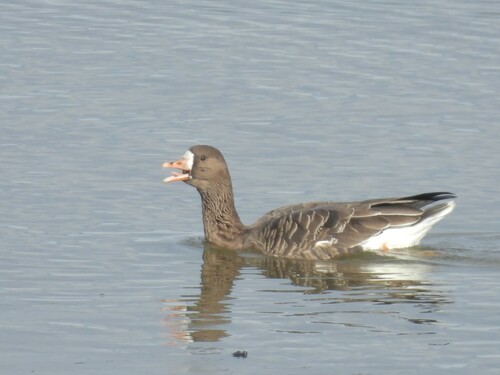
Photo: nar_scol / CC BY-NC 4.0 / iNaturalist
The greater white-fronted goose is a large goose with a white forehead and black bars on the belly, visiting Japan as a winter migrant. Flocks famously lift off together from their roosting marshes at dawn. Wintering sites such as Izunuma-Uchinuma in Miyagi and Katano-no-Kamoike in Ishikawa are designated Natural Monuments, and the species itself is protected.
- Scientific name
- Anser albifrons
- Group
- Birds
- Prefectures
- Hokkaido, Aomori, Miyagi, Niigata, Ishikawa
- When to see
- September to February
- 日本語
- マガン
- 简体中文
- 白额雁
Sign in to record the animals you meet in your private journal and to post photos and comments. Browsing needs no account.
Sign inNatural Monuments related to the Greater White-fronted Goose
Where to see the Greater White-fronted Goose
Facilities whose official websites show this animal on display. Exhibits can change, so check each facility's latest information before you go.
When to see
- 1
- 2
- 3
- 4
- 5
- 6
- 7
- 8
- 9
- 10
- 11
- 12
Arrives at Izunuma-Uchinuma in Miyagi around late September and departs north around late February. Numbers peak around January, with about 16,000 geese.
Exhibit sourceMap
Markers show designated habitats and breeding sites.
Loading map…
Frequently asked questions
The Greater White-fronted Goose is designated as a species without a fixed area and lives in places such as Hokkaido, Aomori, Miyagi, Niigata, Ishikawa.
You can see the Greater White-fronted Goose at Tama Zoological Park, among others (confirmed on each facility's official website on 2026-10-15).
The Greater White-fronted Goose is mainly seen in September to February. Arrives at Izunuma-Uchinuma in Miyagi around late September and departs north around late February. Numbers peak around January, with about 16,000 geese.
Animals related to the Greater White-fronted Goose
Animals in the same group or designated in the same area.
Community photos
Sign in to post and share photos and comments about the animals you meet.
Comments
No comments yet.